What Does a Speed Governor Actually Do?
A speed governor — also called a speed limiter — is an electronic device fitted to commercial and PSV vehicles to cap maximum road speed. In Kenya, NTSA regulations require most public service vehicles and heavy trucks to carry a certified speed governor.
When the device is working correctly, drivers and operators rarely notice it. The problems start when it develops a fault — and many of those faults are not obvious.
Sign 1: Constant or False Alarms
One of the most common complaints is a governor alarm that goes off even when the vehicle is stationary, driving slowly, or under the speed limit. This usually points to:
- A faulty speed sensor sending incorrect readings
- A loose or corroded wiring connection at the sensor
- The governor module receiving power fluctuations due to a grounding issue
A technician will check the speed sensor output first, then trace the signal wire back to the control unit. In most cases, it is a wiring fault rather than a failed module — which makes it a straightforward repair once the fault is located.
Sign 2: The Vehicle Exceeds the Set Speed Without Restriction
If a vehicle can go beyond its programmed speed limit without the governor cutting power or activating, the device is not performing its primary function. This is a compliance and safety issue.
Common causes include:
- A damaged relay or actuator that should cut throttle
- The governor losing power at higher speeds due to a wiring fault
- A module that has been tampered with or has failed internally
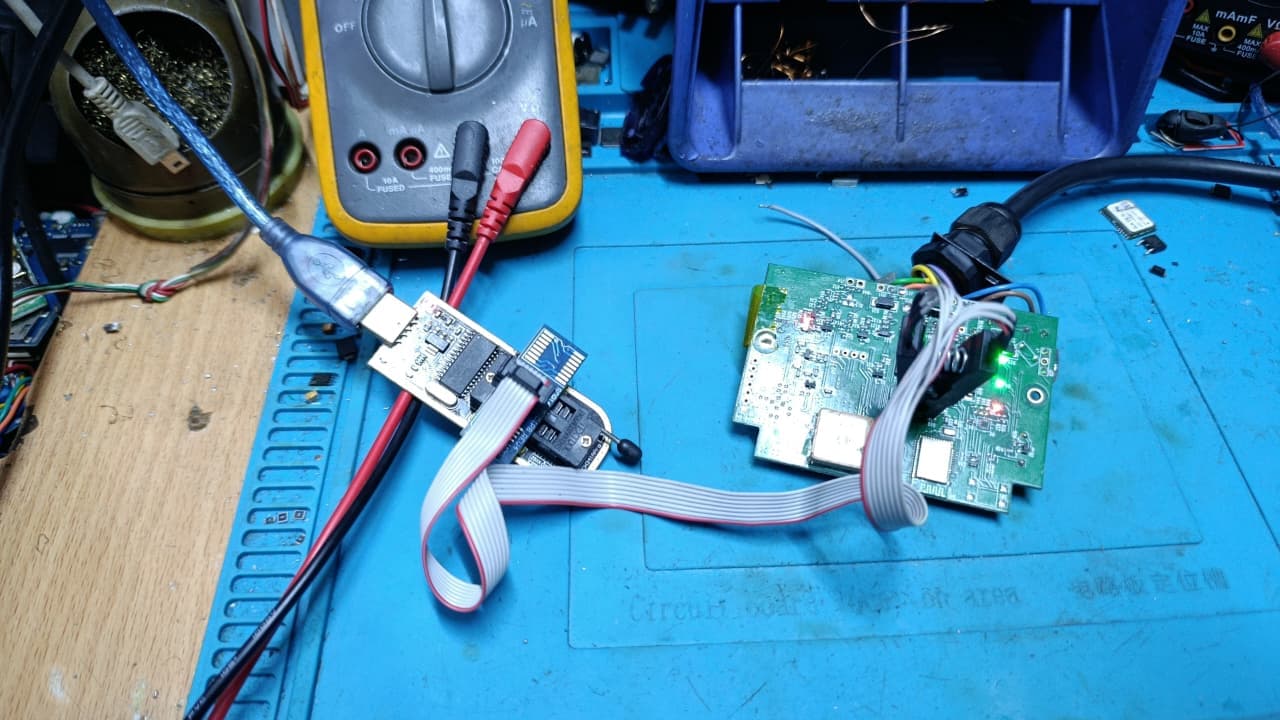
This type of fault is diagnosed under test conditions where the speed signal is simulated on the bench to check if the control unit responds correctly.
Sign 3: The Governor Light Stays On or Flashes Unexpectedly
Most speed governors have a status LED or dashboard indicator. If this light is constantly on, flashing in an unusual pattern, or cycling on and off during normal driving, the device is reporting an internal fault.
What the technician checks:
- The fault code stored in the device (many units support diagnostic readout)
- Power supply voltage — fluctuations below 11V can cause erratic behaviour
- Whether the module itself needs replacement
Sign 4: Sudden Speed Drops or Jerky Driving at Highway Speed
If a driver reports the vehicle suddenly losing power or jerking when reaching the governed speed, it may mean the governor is cutting in too aggressively or intermittently. This can also make the vehicle dangerous to drive.
This symptom often points to:
- A misconfigured speed setting (especially after battery replacement or wiring work)
- A sensor that is reading incorrectly and triggering premature restriction
- An actuator cable that is sticking or incorrectly adjusted
Calibration support — checking and correcting the speed threshold — is part of this repair.
Sign 5: The Device Shows No Power or Display
Some governors have a small screen or LED display showing speed or status. If the device is completely dead — no lights, no display, no alarm — it has lost power or the module has failed.
Before assuming the module is dead, a technician will:
- Confirm 12V supply at the device connector
- Check the fuse for the governor circuit
- Test the ground connection at the device chassis point
- Only then assess whether the module needs replacement
What Happens When You Bring It In
At Vintech Engineering Solutions in Ngara, the diagnostic process for a speed governor starts with a wiring check and power measurement before opening or replacing anything. Most faults are found at the connector, sensor, or ground point — not in the module itself.
If module replacement is required, we advise on compatible units for your vehicle type and can support installation and calibration.
Starting charges for speed governor diagnosis and repair are from KSh 2,500. Call us on 0726332407 or walk in to the Equity Building, Ngara during business hours.